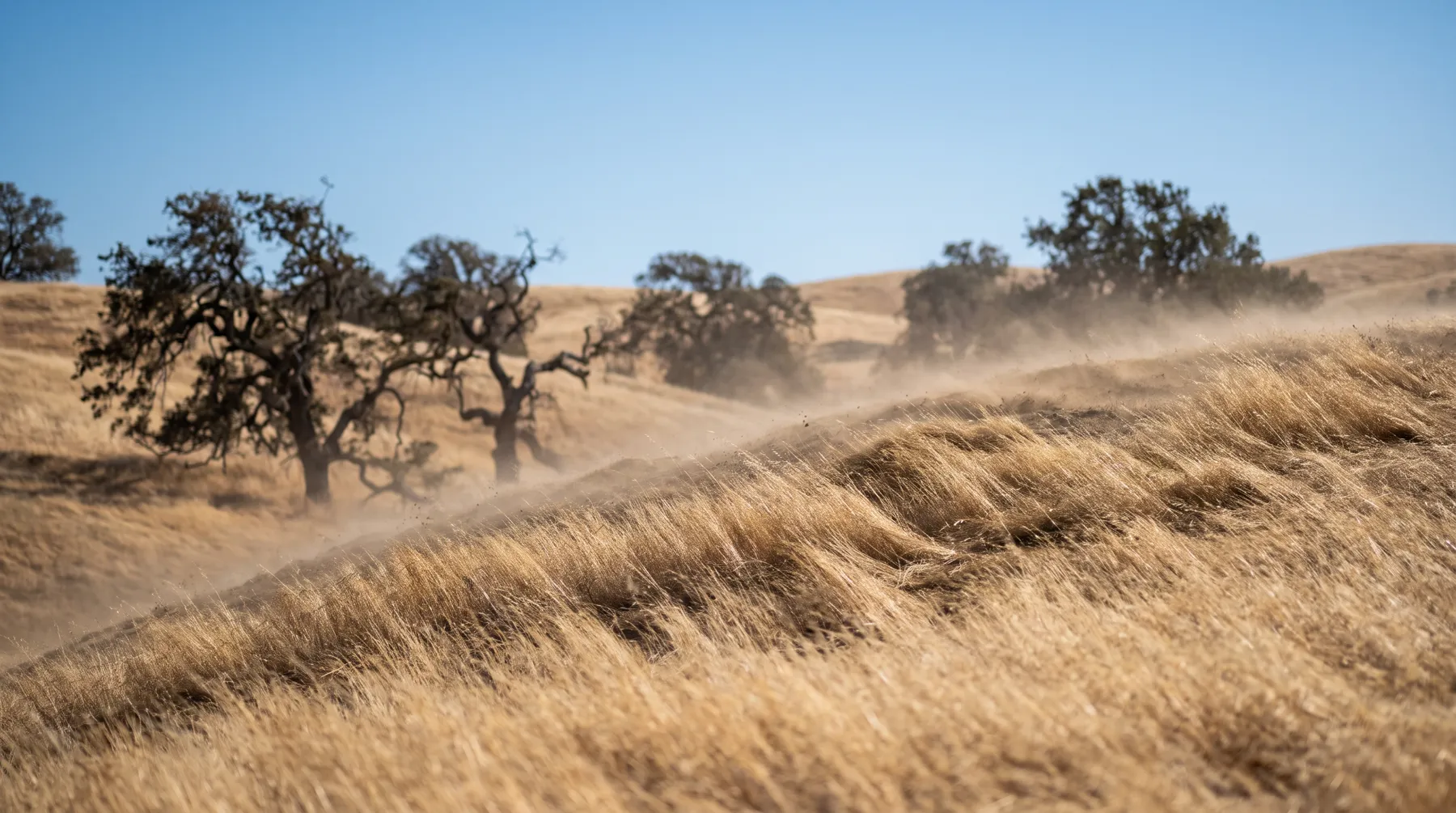
Fire weather watch
A fire weather watch means critical fire weather — strong wind, low humidity, dry fuels — could develop in the next 12 to 72 hours. It's the heads-up before a red flag warning.
Fire weather watches and red flag warnings in effect
Fire weather watch vs red flag warning
| Fire weather watch | Red flag warning | |
|---|---|---|
| When | Critical conditions possible in the next 12–72 hours | Critical conditions happening now or expected shortly |
| Certainty | Possible — forecast confidence is still building | Expected or occurring |
| What to do | Plan: check go-bag, fuel the car, clear dry debris, postpone burning | Act: no sparks or flames outdoors, stay alert for fires and alerts |
Both are issued by your local National Weather Service office using thresholds for wind, humidity and fuel dryness that fit that region. A watch is often upgraded to a red flag warning as the event gets closer — or cancelled if the forecast changes.
Source: National Weather Service fire weather program (weather.gov/fire).
Questions
What does a fire weather watch mean?
That the weather may turn critical for fire — strong winds with very low humidity over dry vegetation — within the next 12 to 72 hours.
Should I be worried about a fire weather watch?
It's a signal to prepare, not to panic: check your evacuation plan and go-bag, avoid outdoor burning and keep an eye on alerts.
Who issues fire weather watches?
Local National Weather Service forecast offices, in coordination with fire agencies.

Get alerts before the smoke arrives
Wildfire Tracker for iPhone: fires near your saved places, containment, wind direction and air quality — with alerts only for fires that are actually active. Free, no account.